Bio-Holographic Scanner
This page contains affiliate links and/or sponsored content. I may earn a commission if you purchase through my links at no cost to you.
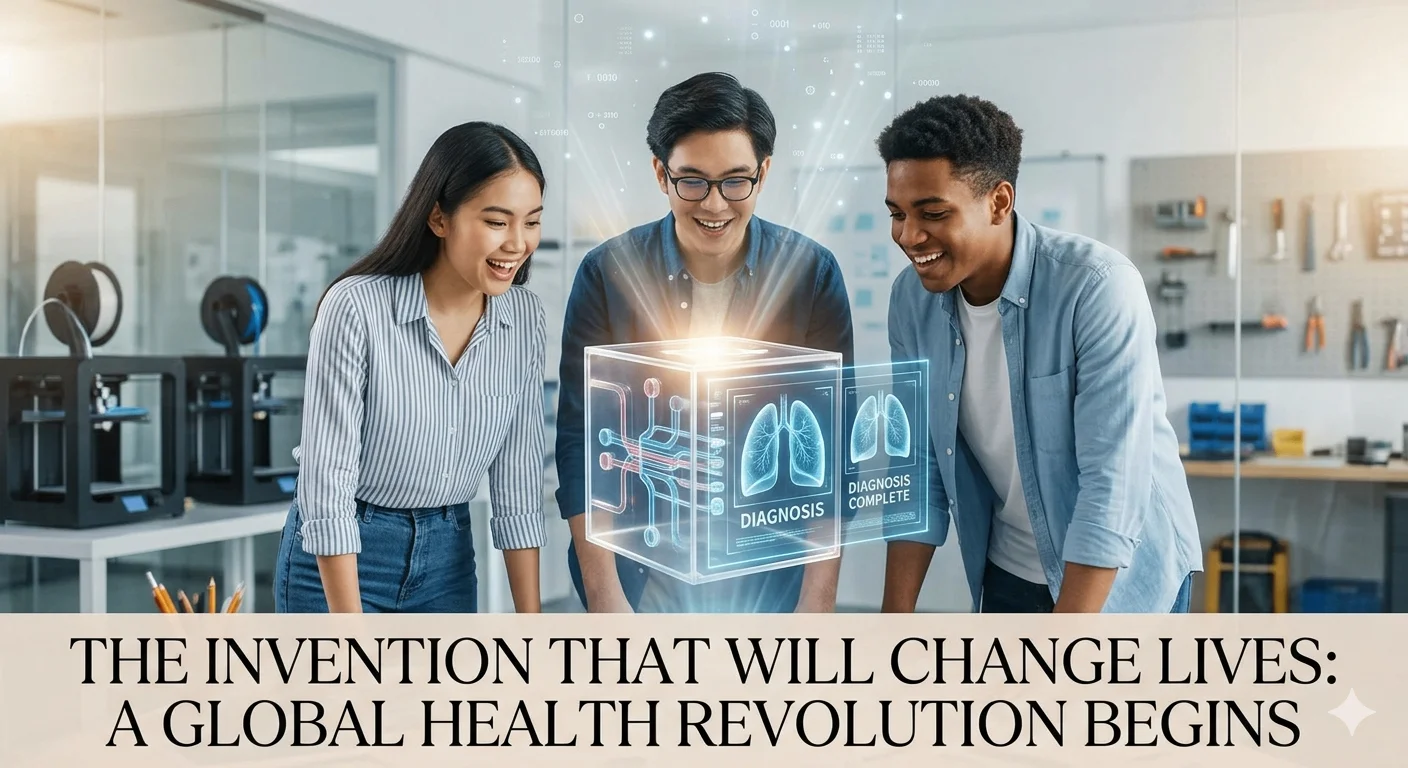
The pace of human innovation is relentless. We often tell ourselves that we are living in 'the future,' but every so often, a breakthrough emerges that redefines what that 'future' looks like. We are standing on the precipice of such a moment.
Forget bulky MRI machines, multi-day wait times for lab results, and the anxiety of geographical barriers to complex diagnostics. A new invention has emerged from a stealth startup in Boston, one that promises to do for diagnostics what the smartphone did for computing: miniaturize it, make it personal, and make it instantly accessible to anyone, anywhere.
Meet the Bio-Holographic Scanner (BHS-1).
This is not a theoretical concept; it's a working prototype that is already exceeding performance expectations in clinical trials. It is, quite simply, an absolute game-changer.
The Problem: The Diagnostic Bottleneck
To understand why the BHS-1 is so revolutionary, we must first look at the massive bottleneck that exists in global healthcare. Today, a significant percentage of treatable diseases become critical, or fatal, simply because they are diagnosed too late.
Current diagnostic paths are slow, expensive, and require specialized, centralized infrastructure. If you live in a major western city, you might wait days for a blood panel or weeks for a specialist imaging appointment. If you live in a remote, rural area, or a developing nation, access to these labs may be non-existent.
This delay means treatment starts late, outcomes worsen, and costs skyrocket. The system is reactive, not proactive.
The Solution: A Lab on a Chip, Powered by Light
The Bio-Holographic Scanner elegantly smashes this bottleneck. The device itself is tiny—about the size of a modern automotive key fob—but packed inside is a fusion of advanced optics, microfluidics, and artificial intelligence.
So, how does it work?
1. The Single Drop
The process is minimally invasive. The user deposits a single drop of fluid (blood, saliva, or urine) onto a disposable, bio-sensitized microfluidic cartridge.
2. Holographic Imaging
Once inserted into the scanner, the fluid sample is analyzed not by chemical reagents, but by light. A tiny laser beam is split and passed through the sample. Crucially, the scanner uses a technique called bio-holography.
Traditional microscopy looks at a sample in two dimensions. Bio-holography captures the absolute full phase and amplitude of the light as it interacts with the biological molecules. It creates a three-dimensional, high-resolution digital hologram of every cell, pathogen, protein, and biomarker in that single drop.
3. AI-Powered Analysis
This massive holographic dataset is processed locally by a custom, dedicated AI chip. The AI has been trained on petabytes of verified medical data, allowing it to instantly recognize the unique 'optical fingerprint' of thousands of conditions.
Instant, Lab-Grade Results
Instead of waiting days, the entire process—from sample to result—takes less than 60 seconds.
The scanner doesn't just give a positive or negative result. It provides a comprehensive quantitative panel, just like a centralized lab, but immediately. The prototype BHS-1 is already validated to detect:
- Early-Stage Cancers: Identifying circulating tumor cells at concentrations previously impossible to detect without specialized equipment.
- Infectious Diseases: Distinguishing between viral, bacterial, and fungal infections instantly, cutting down on inappropriate antibiotic use.
- Cardiovascular Markers: Instant readouts of troponin and lipid profiles.
- Hormonal and Metabolic Panels: Comprehensive health wellness checks in under a minute.
Why This Changes Everything
The implications of the Bio-Holographic Scanner are profound, offering a path to a more equitable and proactive health system.
1. Global Health Access
The device requires no specialized infrastructure, constant power grid, or highly trained technicians. A community health worker in a remote village can have the diagnostic power of a major teaching hospital in their pocket. This has the potential to save millions of lives by catching treatable diseases like malaria, tuberculosis, and early-stage cancer before they progress.
2. The Rise of Proactive Medicine
Imagine having this device at home. A simple monthly, or even weekly, check could monitor biomarkers and identify trends before symptoms appear. This is the definition of truly preventative medicine, reducing the burden on emergency care.
3. Disruption of Healthcare Costs
By shifting diagnostics from expensive, centralized labs to affordable, decentralized point-of-care, the BHS-1 can radically lower the overall cost of healthcare.
The Road Ahead
Of course, with any groundbreaking new invention, there are hurdles. The device is currently moving from prototype into the rigorous final phase of FDA and international regulatory approval. Establishing secure, private data protocols for transmitting results will also be critical.
However, the core technology is proven, and the vision is clear. The Bio-Holographic Scanner isn't just a clever gadget; it is a fundamental rethinking of how humanity interacts with medical science.
The "Future of Healthcare" is no longer a distant concept. It's a small, glowing device, and it’s about to change the world.