7 Timeless Home Décor Ideas
This page contains affiliate links and/or sponsored content. I may earn a commission if you purchase through my links at no cost to you.

Your home is more than just a place to live . it’s a reflection of your personality, your lifestyle, and the memories you create every day. Whether you’re moving into a new place, refreshing a room, or just looking for a little inspiration, these timeless home décor ideas will help you transform your space into a warm, stylish, and functional haven.
1. Embrace a Neutral Color Palette
Neutral colors are timeless and versatile, creating a serene and welcoming atmosphere in your home. They allow you to balance natural textures and keep the space feeling fresh and clean. Neutral tones like soft beige, warm whites, light grays, and muted earthy hues are perfect for those seeking a peaceful, calm environment. These colors can be used on walls, large furniture pieces, and accessories to create a space that’s elegant yet understated.
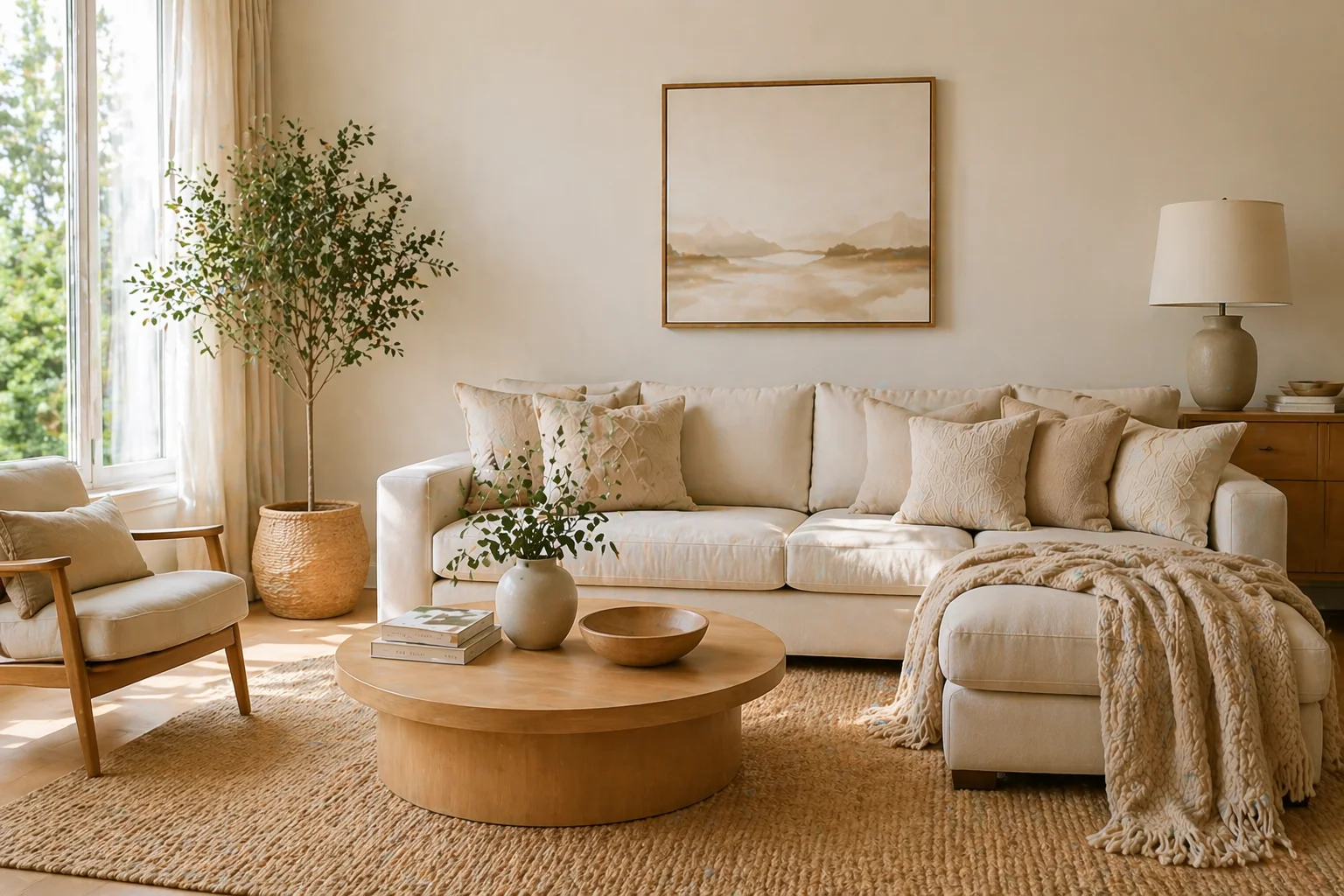
How to Implement a Neutral Color Palette:
Walls and Ceilings:
- Opt for light, neutral shades for walls and ceilings to create a spacious feel. Soft beige, ivory, or light gray work well in both large and small rooms.
- These colors reflect light, making your space feel brighter and more open. This is particularly important in smaller spaces where you want to maximize light.
Furniture:
- For the larger furniture pieces like sofas, chairs, and tables, choose neutral tones such as cream, soft gray, or taupe. These tones act as a great foundation and let you layer in accents.
- Neutral upholstery also offers the flexibility to easily change accent colors or patterns through pillows, throws, and rugs without clashing with the furniture.
Textiles and Accents:
- Soft, natural fabrics such as linen, cotton, or wool in neutral shades are ideal for throws, cushions, curtains, and rugs.
- Play with various textures (knitted, woven, and smooth) to keep the space visually interesting without introducing strong colors or patterns.
Natural Materials:
- Incorporate wood, stone, and rattan for a natural look that brings warmth and character. Light wood tones are often a hallmark of Scandinavian design, creating a cozy yet sleek environment.
- Use materials like linen for cushions or jute for rugs to maintain the relaxed, organic feel of the space.
Adding Personality with Accents:
While a neutral color palette serves as a calm backdrop, adding the right accents is key to personalizing the space. Here are some ideas for integrating personality into the minimalist design:
Pillows and Throws:
- Keep the color palette consistent with neutral tones, but experiment with different textures and patterns. Subtle stripes, chevron, or geometric prints in muted tones can add interest without overwhelming the room.
- Layering textured throws on the sofa gives the space a cozy and lived-in feel while maintaining the sleek minimalist aesthetic.
Indoor Plants:
- Plants are a fantastic way to introduce a burst of green and life into a neutral space. Opt for plants like fiddle-leaf figs, rubber plants, or small succulents, which complement the minimalist style without overwhelming it.
- A single large plant or multiple smaller plants placed in simple, neutral-colored pots adds both vibrancy and a calming touch to the room.
Artwork and Decorations:
- Artwork is one of the easiest ways to introduce personality while maintaining the neutral palette. Opt for abstract prints or landscape art in subdued tones to avoid clashing with the calming atmosphere.
- You can also hang simple black-and-white photography or nature-inspired prints to enhance the serene feeling.
Benefits of Using a Neutral Color Palette in Your Home:
- Timeless and Versatile: Neutral colors never go out of style and can evolve with the seasons. You can easily switch up accent pieces, changing the feel of the room with minimal effort.
- Increases the Perception of Space: Light colors make a room feel more expansive, making them perfect for smaller spaces or rooms with limited natural light.
- Creates a Calm, Relaxing Environment: Soft tones are soothing, helping to promote relaxation, especially in areas like the living room, bedroom, or even home offices.
- Easy to Maintain: Neutral colors are more forgiving with dirt or wear, which is a practical choice for high-traffic areas like living rooms or hallways.
2. Layer Your Lighting for Warmth and Mood
A beautiful room is not created by furniture alone. Lighting plays one of the biggest roles in how a space feels, looks, and functions. Even the most well-designed room can feel flat or cold when the lighting is harsh, too dim, or limited to a single ceiling fixture. That is why layered lighting is one of the smartest home décor ideas you can use in any room.
Instead of depending on one light source, a well-styled space combines different types of lighting to create balance and atmosphere. This approach helps your home feel more inviting during the evening, adds depth to your décor, and highlights the details that make your space special.
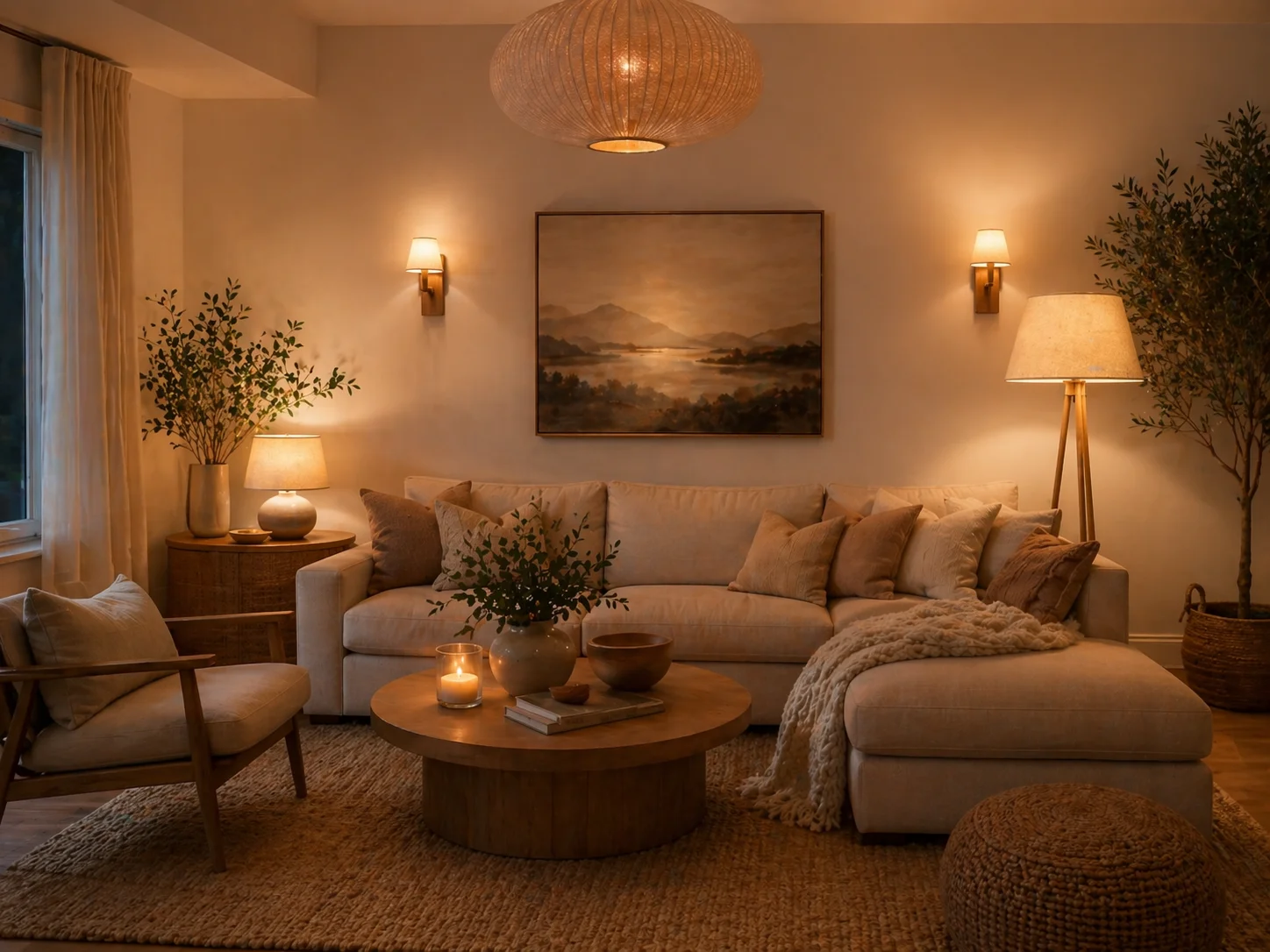
Why layered lighting works
Layered lighting makes a room feel more intentional and luxurious. It helps you control the mood of the space depending on the time of day and the activity taking place. Bright general lighting may work for cleaning or organizing, but softer pools of light are better for relaxing, entertaining, or winding down at night.
It also improves the visual look of your home. When light comes from different levels of the room ceiling, eye level, table level, and floor level — the space feels richer, warmer, and more dimensional.
The three main layers of lighting
1. Ambient lighting
This is your main source of light. It fills the room and makes it possible to move around comfortably. Ceiling lights, recessed lights, and large pendant fixtures usually fall into this category.
2. Task lighting
This type of lighting is designed for specific activities such as reading, cooking, working, or applying makeup. Table lamps, desk lamps, under-cabinet kitchen lights, and bedside lamps are all task lighting.
3. Accent lighting
Accent lighting is the decorative layer. It highlights art, shelves, corners, textures, plants, or architectural details. Wall sconces, picture lights, LED strips, and small spotlights help create this effect.
How to style it in your home
Start by looking at each room and asking one simple question: does this space only have one light source? If the answer is yes, that room will instantly improve by adding one or two extra layers.
In the living room, use a ceiling light for general brightness, then add a floor lamp near the sofa and a table lamp on a side table. In the bedroom, combine a soft overhead light with bedside lamps to create a more restful and cozy atmosphere. In the dining area, a warm pendant above the table paired with subtle wall lighting can completely transform the room.
Try to keep your lighting warm rather than too cool. Warm white bulbs usually make a home feel more comfortable and welcoming, while very cool white lighting can feel too clinical in living spaces.
Easy ways to make lighting feel more expensive
- Use matching lampshades or coordinated finishes for a polished look
- Add dimmable bulbs so you can change the mood easily
- Place a lamp in an empty corner to make the room feel fuller
- Use lighting to highlight artwork, textured walls, or open shelves
- Mix materials like linen shades, ceramic lamp bases, brass finishes, or wood details for extra character
Best rooms to apply this idea
Layered lighting works in every room, but it makes the biggest difference in:
- living rooms
- bedrooms
- dining spaces
- reading corners
- home offices
Common mistakes to avoid
One common mistake is using only a bright ceiling light and nothing else. Another is choosing bulbs that are too white or too harsh, which can make a cozy room feel cold. Oversized fixtures in a small room can also look unbalanced, while very tiny lamps may not give enough visual impact or function.
Final styling tip
Think of lighting as part of your décor, not just something practical. A well-chosen lamp can act like a design piece, just like a chair, mirror, or artwork. When your lighting is layered correctly, your home instantly feels softer, more stylish, and far more inviting.
3. Bring Nature Indoors with Greenery and Organic Textures
One of the easiest ways to make a home feel fresh, calm, and beautifully styled is to bring natural elements into the space. Indoor plants, woven textures, raw wood, linen, stone, and rattan instantly soften a room and make it feel more alive. This idea works especially well when your base colors are neutral, because the greenery and earthy materials add warmth without making the space feel cluttered.
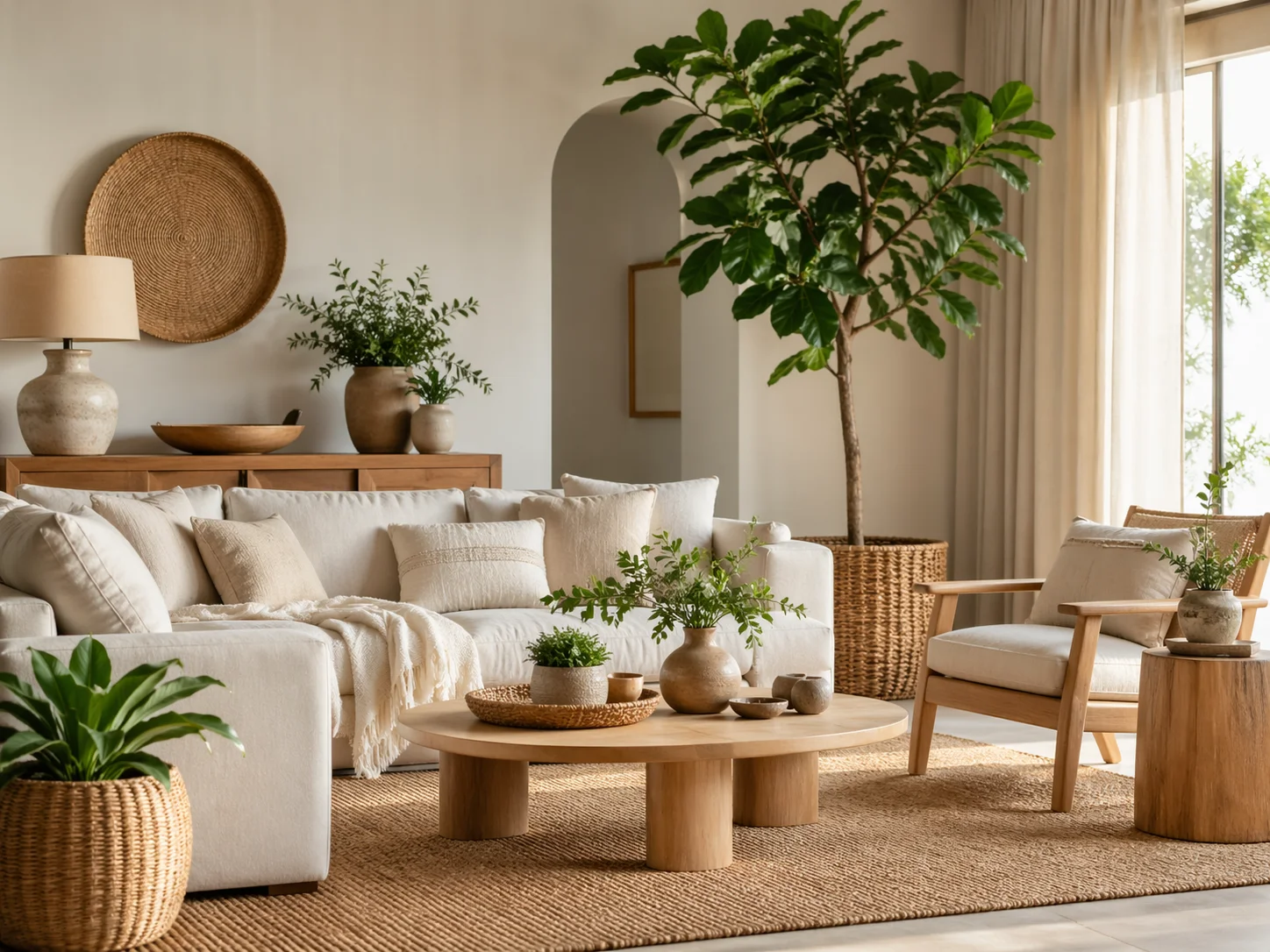
Natural styling is not just about decoration. It changes the mood of a room. A space with plants and organic textures often feels more peaceful, grounded, and welcoming. Even a simple corner with a leafy plant, a woven basket, and a wooden stool can make the room feel intentionally designed.
Why it works
Natural materials add depth and character. Where plain walls and furniture can sometimes feel flat, wood grains, woven fibers, and living greenery create movement and texture. Plants also help a room feel more relaxed and visually balanced.
How to do it
- Add one large floor plant in an empty corner
- Style shelves with small plants, ceramic vases, and natural wood accents
- Use woven baskets for storage and décor
- Choose linen curtains, cotton cushions, or jute rugs
- Mix textures like wood, cane, rattan, clay, and stone
- Keep the arrangement simple so the room still feels airy
Best places to use this idea
- living room corners
- entryway tables
- bedroom side tables
- dining areas
- bathroom shelves
- home office spaces
Styling tip
Do not overfill the room with too many plants or accessories. A few well-placed natural elements usually look more elegant than trying to decorate every corner. Think calm, airy, and organic.
4. Use Mirrors to Make Your Space Feel Bigger and Brighter
Mirrors are one of the easiest and most effective home décor tools because they do two jobs at the same time: they decorate the room and they visually expand it. A well-placed mirror can reflect natural light, brighten dark corners, and make even a small room feel more open and airy.
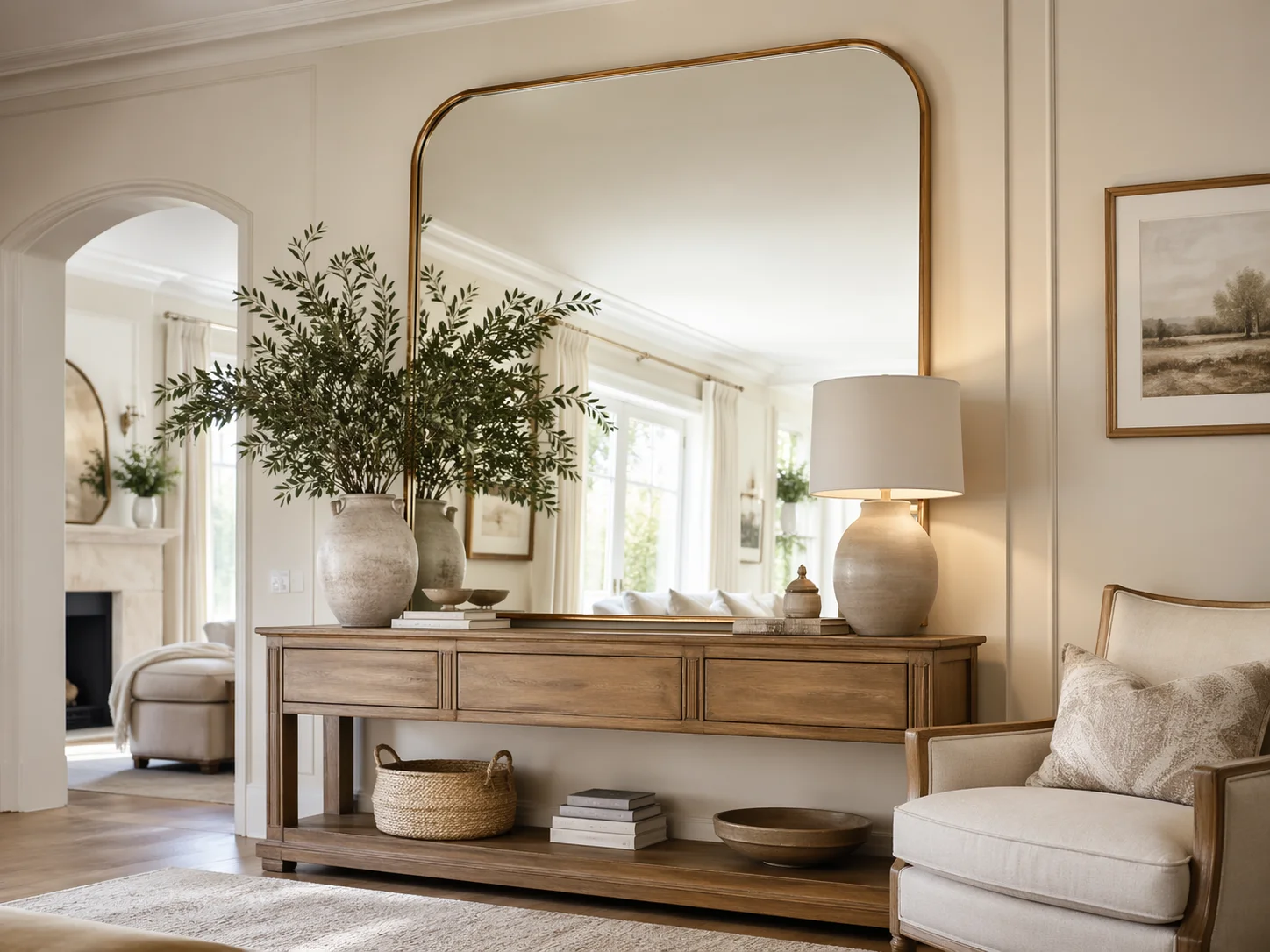
This idea works especially well in apartments, compact living rooms, narrow hallways, and bedrooms that need a little extra light. Instead of thinking of a mirror as just a practical item, treat it like a design feature that adds elegance and balance to the room.
Why it works
Mirrors reflect both light and space. When placed across from a window or near a light source, they help spread brightness throughout the room. They also create the illusion of depth, which makes the room feel less tight and more welcoming.
A beautiful mirror can also act like wall art. Whether you choose a large arched mirror, a round wooden-framed mirror, or a sleek modern design, it can become a focal point that instantly upgrades the overall look of your space.
How to use mirrors in home décor
- Place a large mirror opposite a window to reflect daylight
- Use a round mirror above a console table or sideboard
- Lean a tall mirror against a wall in a bedroom or dressing corner
- Add a mirror in a narrow hallway to make it feel less closed in
- Choose frames in wood, brass, black metal, or rattan to match your décor style
Best places to use this idea
- entryways
- living rooms
- dining areas
- bedrooms
- hallways
- small apartments
Styling tip
Do not place a mirror where it reflects clutter, because that can make the room feel busier instead of calmer. Reflecting a window, a lamp, greenery, or a beautiful piece of furniture usually gives the best result.
Common mistake to avoid
Using a mirror that is too small for the wall can make the setup feel disconnected. A mirror should feel proportional to the furniture under or around it so the whole arrangement looks intentional and polished.
5. Create a Cozy Reading Nook or Relaxation Corner
Not every beautiful room needs a full makeover. Sometimes, one thoughtfully designed corner can change the whole feeling of your home. A cozy reading nook or relaxation corner gives your space personality, warmth, and purpose. It becomes the place where you unwind with a book, enjoy a cup of tea, journal, or simply take a break from the noise of daily life.
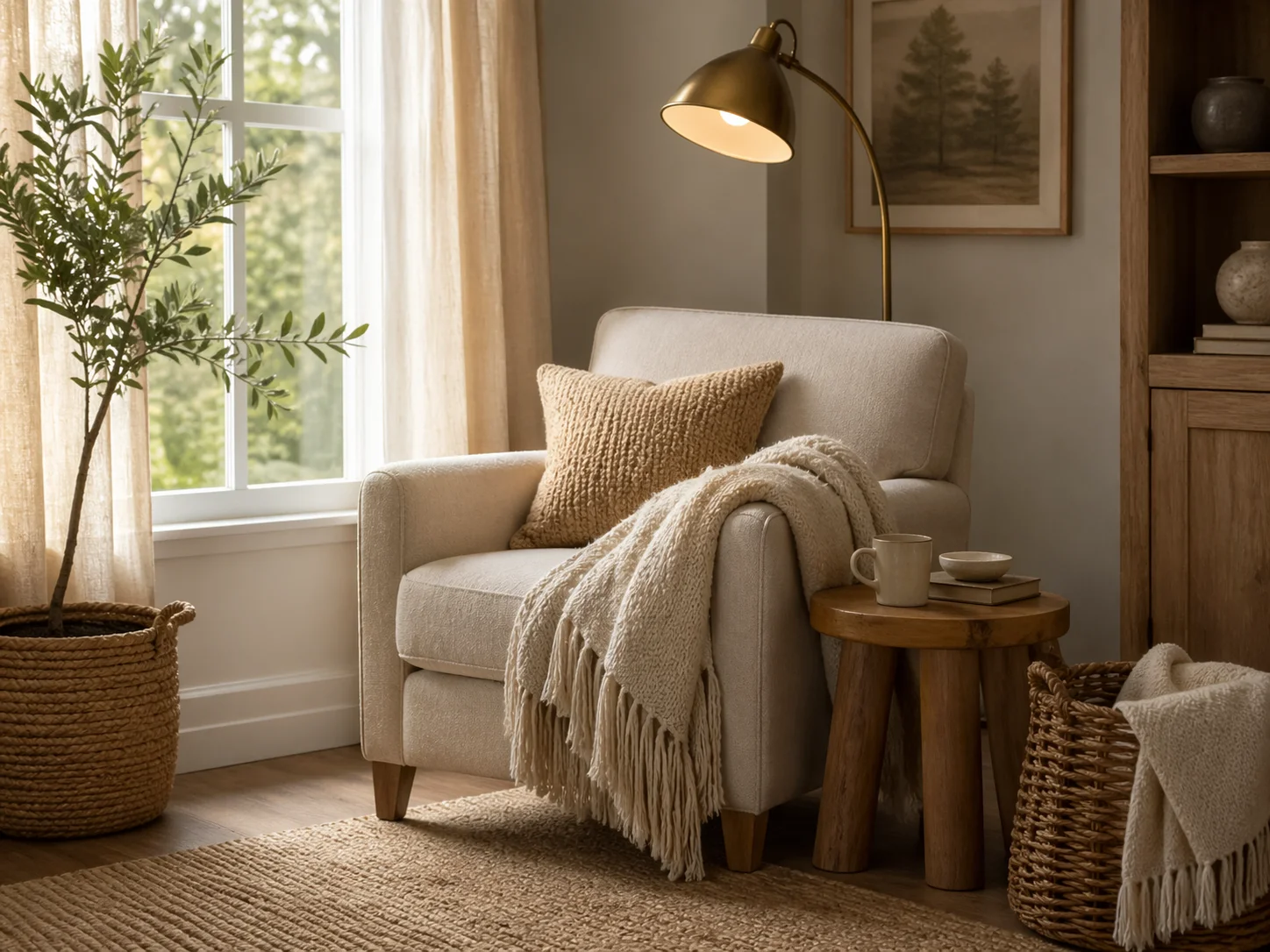
This idea works because it makes your home feel lived-in and intentional. Even if the rest of the room is simple, a well-styled corner instantly adds charm and comfort.
Why it works
A reading nook brings together comfort and design. It fills an empty corner in a functional way while adding softness, layering, and a sense of calm. It also makes the home feel more inviting, because it shows that the space is designed for real life, not just appearance.
How to create it
Start with one comfortable chair or a compact accent chair. Add a small side table for books, candles, or a drink. Then bring in softness with a throw blanket, textured cushion, and a warm lamp. If the nook is near a window, even better natural light makes the space feel peaceful during the day.
You can also style the corner with a small stack of books, a woven basket, a plant, or a simple framed piece of art. The goal is not to overcrowd the space, but to make it feel calm and personal.
Best places to use this idea
- an empty living room corner
- beside a bedroom window
- near a bookshelf
- at the end of a hallway
- in a quiet office corner
Styling tip
Choose pieces that feel soft and warm rather than too formal. A linen chair, a knit throw, a wooden side table, and warm lighting usually create the most inviting look.
6. Add Texture for Depth and Warmth
A beautiful room is not only about color — it is also about texture. Texture is what makes a space feel layered, cozy, and thoughtfully designed. Even if your room uses simple neutral shades, it can still feel rich and inviting when you combine different materials like linen, cotton, wool, wood, rattan, jute, and ceramic.
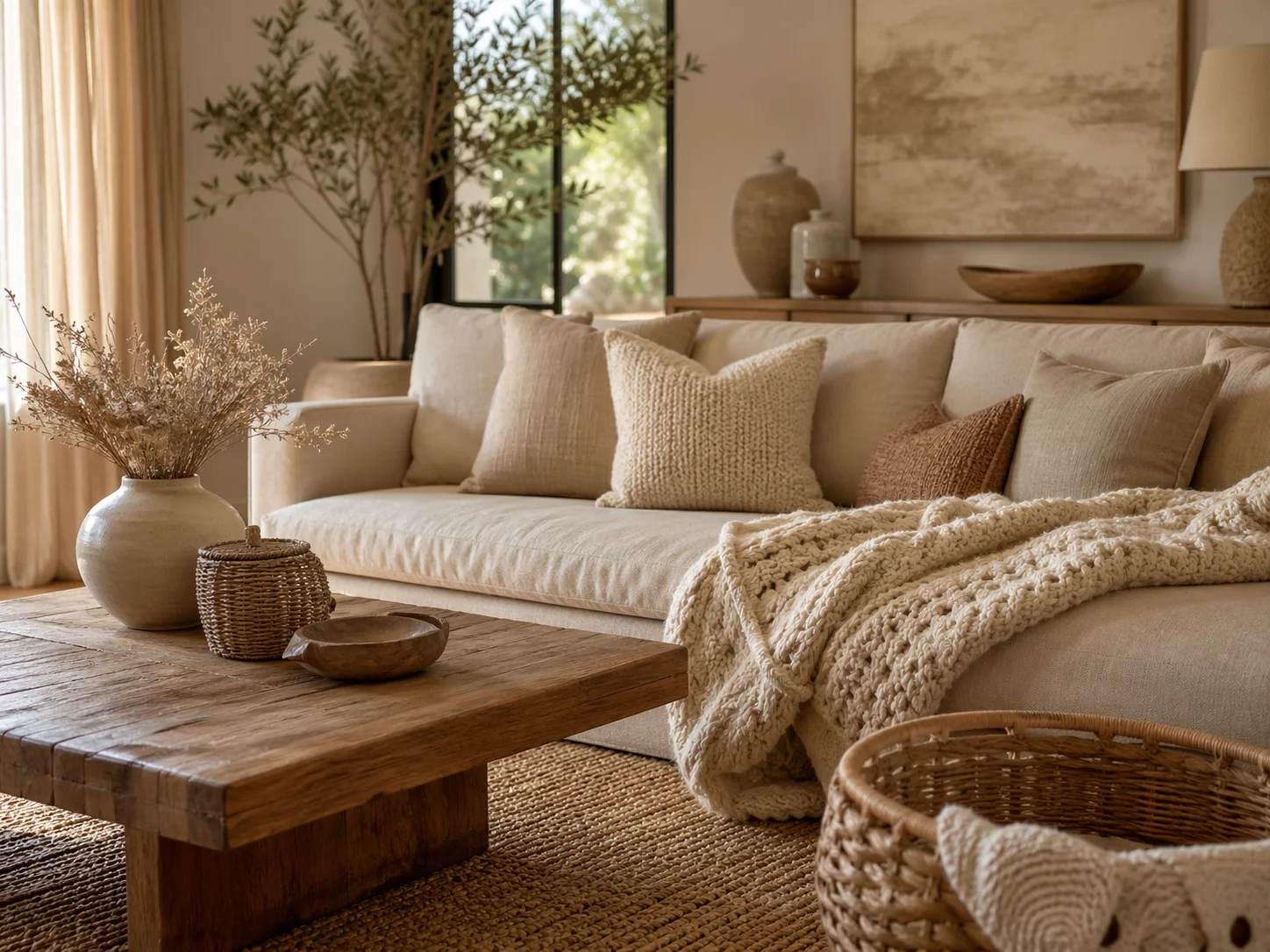
This idea works because texture adds visual interest without making the room feel busy. A woven rug, a knitted throw, linen curtains, a wooden coffee table, and soft cushions can instantly make a plain space feel warmer and more complete.
Why it works
Different textures catch light in different ways and help create balance in a room. Soft fabrics make the space feel comfortable, while natural materials like wood and woven fibers add warmth and character. This combination makes the room feel styled but still relaxed.
How to do it
- Layer rugs, throws, and cushions in different fabrics
- Mix smooth and rough finishes, like soft linen with raw wood
- Add woven baskets or rattan pieces for organic texture
- Use ceramic vases, stone décor, or matte finishes for contrast
- Keep the color palette cohesive so the room feels calm rather than crowded
Best places to use this idea
- living rooms
- bedrooms
- reading corners
- entryways
- dining areas
Styling tip
Try mixing at least three different textures in one area. For example, pair a linen sofa, a chunky knit throw, and a jute rug. The room will instantly feel more welcoming and visually complete.
7. Style with Meaningful Personal Touches
The most beautiful homes are not the ones that look copied from a catalog — they are the ones that feel personal, warm, and lived in. After you have chosen your colors, furniture, lighting, textures, and layout, the final step is to add pieces that reflect your story. This is what turns a nicely decorated room into a home with real character.
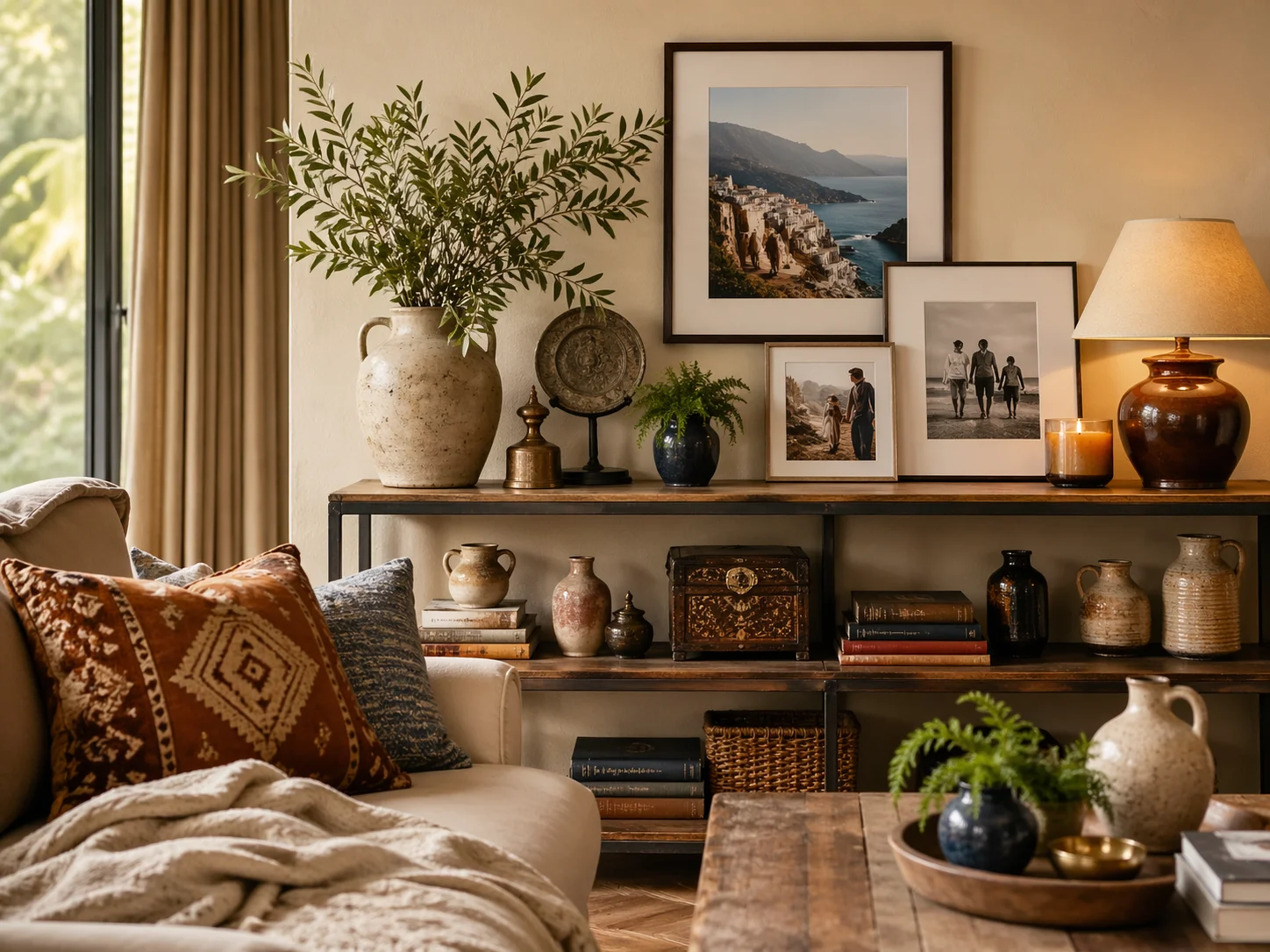
Personal touches can be simple: a framed travel photo, a stack of favorite books, handmade ceramics, a candle you always use in the evening, or a vintage piece passed down through family. These details create emotional connection and make your space feel unique.
Why it works
Personal décor adds soul to a room. It gives guests something to notice and makes you feel more connected to your space every day. Even a minimal room feels warmer when it includes items that have meaning.
How to do it
- Display a few favorite books on a table or shelf
- Add framed photos, art prints, or sketches you truly love
- Use souvenirs or collected objects in a curated way
- Mix old and new pieces for a lived-in look
- Choose décor that reminds you of good memories, places, or people
Best places to use this idea
- entryway console tables
- bookshelves
- coffee tables
- bedroom dressers
- gallery walls
- side tables and open shelves
Styling tip
Do not place everything out at once. Choose a few meaningful items and style them with breathing space around them. A home feels elegant when the personal pieces are curated, not crowded.
Final thought
A well-decorated home should not only look good — it should feel like you. Meaningful personal touches are what make your space memorable, comforting, and timeless.