7 Beautiful Garden and Yard Ideas
This page contains affiliate links and/or sponsored content. I may earn a commission if you purchase through my links at no cost to you.
A beautiful garden or yard does not always need a huge budget or a complete makeover. Sometimes, small thoughtful changes can completely transform the way your outdoor space looks and feels. Whether you have a large backyard, a small lawn, a patio, or a compact garden corner, the right design ideas can turn it into a relaxing place where you can sit, entertain guests, enjoy your morning tea, or simply breathe in some fresh air.
Your outdoor space should feel like a natural extension of your home. It should be comfortable, welcoming, and practical. With the right balance of greenery, seating, lighting, pathways, and decorative details, even the simplest yard can become a peaceful retreat.
In this blog, we will explore seven beautiful garden and yard ideas that can help you refresh your outdoor space and make it more stylish, useful, and inviting.
1. Create a Cozy Outdoor Seating Corner
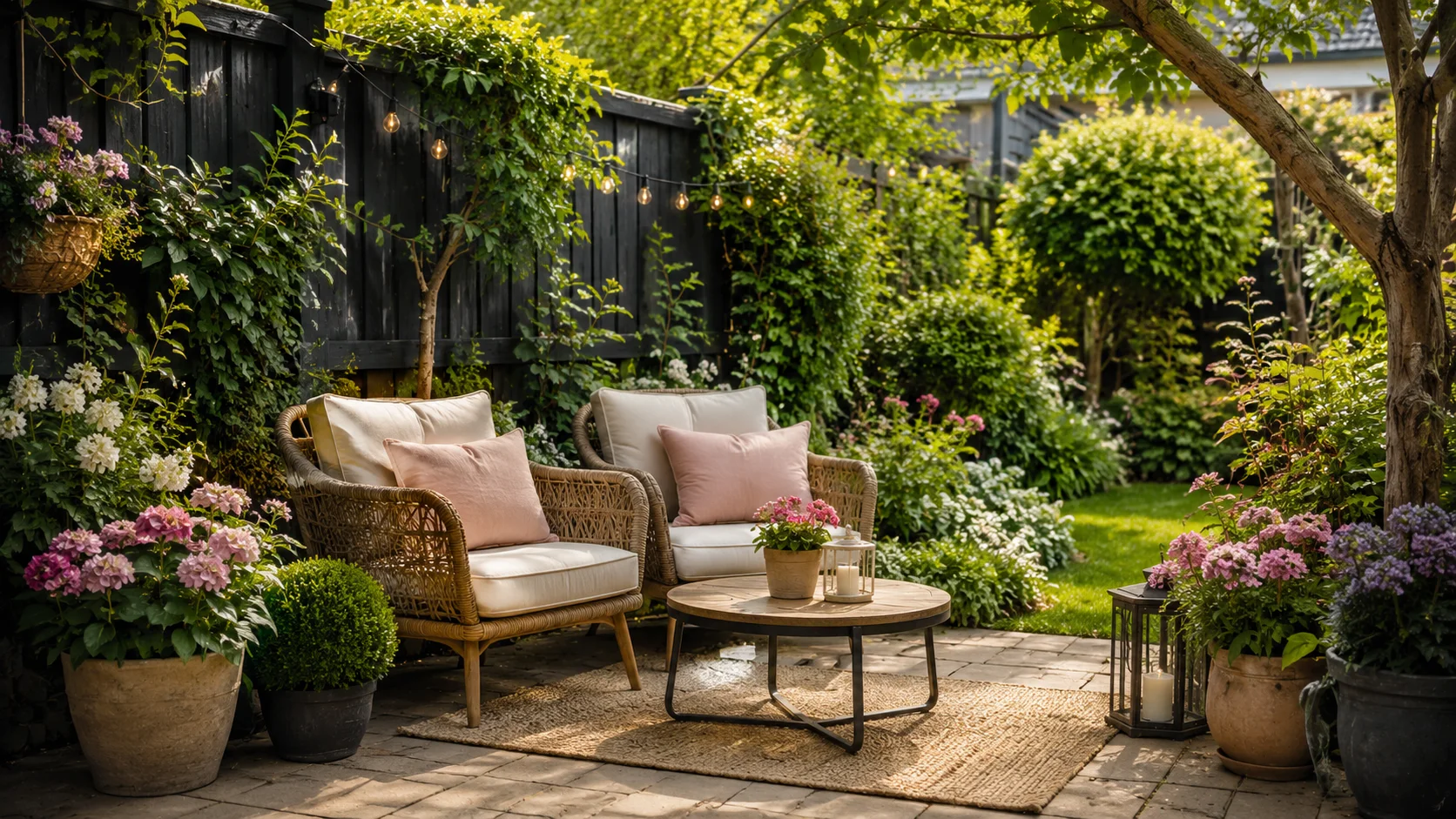
One of the best ways to make your garden or yard feel more inviting is to create a dedicated seating corner. A garden becomes much more useful when there is a comfortable place to sit, relax, and enjoy the surroundings. It does not have to be large or expensive. Even a small bench, two outdoor chairs, or a compact patio sofa can make a big difference.
A cozy seating area gives purpose to your outdoor space. Instead of just looking at the garden from inside the house, you create a place where you can actually spend time. It becomes the perfect spot for morning coffee, evening tea, reading, family conversations, or quiet relaxation after a busy day.
The key is to make the seating feel connected to the rest of the garden. Place it near plants, flowers, trees, or a pathway so it feels naturally part of the outdoor design. If your yard has a shaded area, that is a great place to start. If not, you can add shade with an umbrella, pergola, or lightweight canopy.
To make the seating corner feel warm and comfortable, use outdoor cushions, a small table, a woven rug, and a few potted plants around the area. These simple details make the space feel styled and complete. Choose materials that can handle outdoor weather, such as rattan, treated wood, metal, or weather-resistant fabric.
A seating corner also helps your garden feel more personal. You can style it according to your taste — modern, rustic, bohemian, minimalist, or traditional. For a calm and natural look, use neutral cushions, wooden furniture, terracotta pots, and soft greenery. For a colorful garden style, add patterned cushions, bright flowers, and decorative lanterns.
Why this idea works
A cozy seating corner instantly changes the function of your yard. It turns empty outdoor space into a place where people naturally want to sit and spend time. It also makes the garden feel more welcoming because it adds comfort, structure, and personality.
How to create it
Start by choosing one peaceful corner of your yard or garden. Add a bench, outdoor chairs, or a small sofa. Place a small table nearby for drinks, books, or décor. Then surround the area with plants, pots, or flowers to make it feel soft and natural. Add outdoor cushions and warm lighting to complete the look.
Best places to use this idea
This idea works beautifully in:
- backyard corners
- patios
- under trees
- near flower beds
- beside garden pathways
- small balconies or terraces
- front yard sitting areas
Styling tip
Keep the seating area simple but comfortable. Too much furniture can make the garden feel crowded. A few well-chosen pieces with soft cushions, plants, and lighting will look more elegant and easier to maintain.
2. Add a Beautiful Garden Pathway
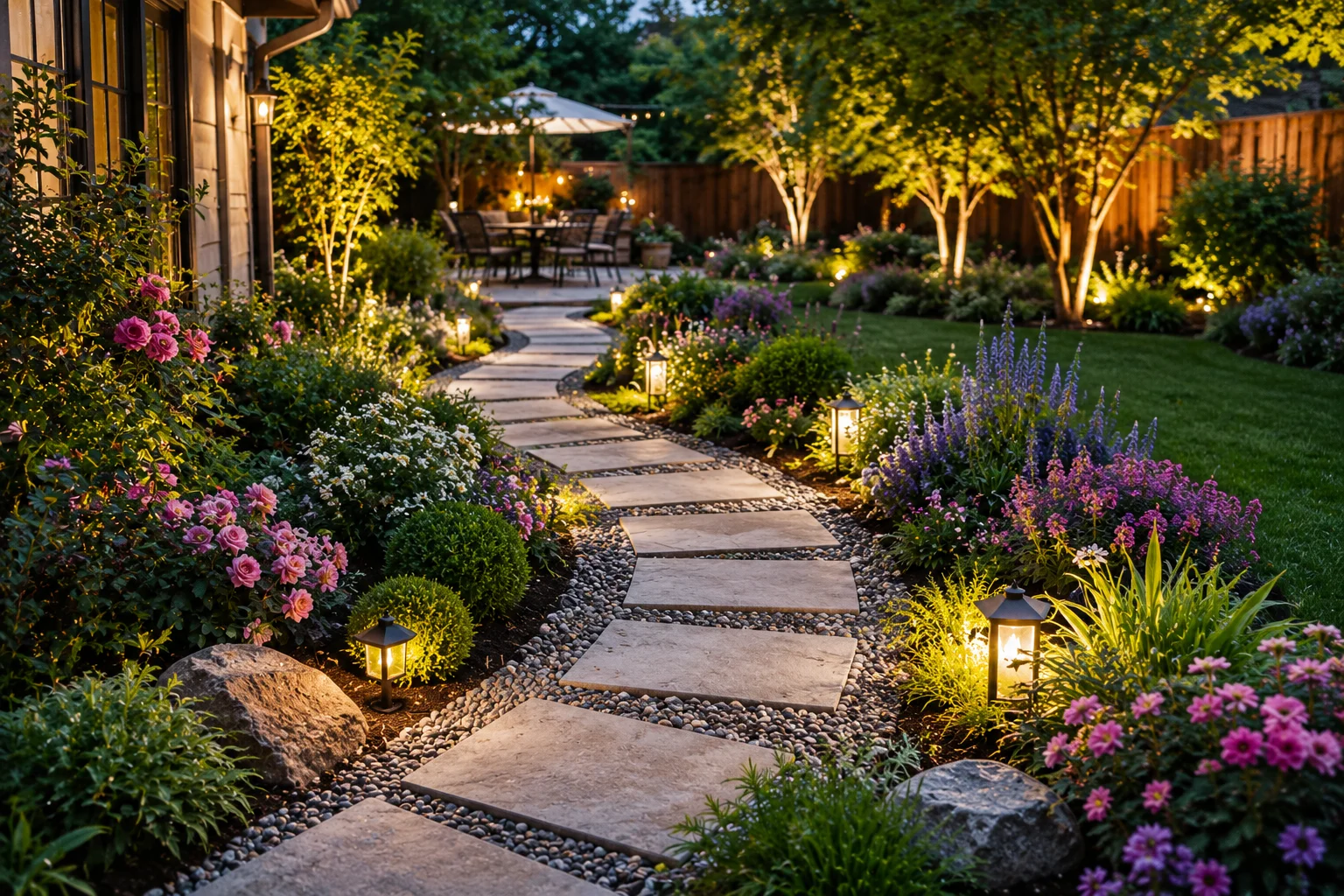
A garden pathway is one of the easiest ways to make your outdoor space feel more organized, polished, and inviting. It gives direction to the yard and helps connect different areas, such as the seating corner, flower beds, patio, lawn, or entrance. Even a simple path made with stepping stones can make the garden feel more complete and thoughtfully designed.
A pathway does not only serve a practical purpose. It also adds beauty and structure. When placed correctly, it naturally guides the eye through the garden and encourages people to explore the space. Whether your yard is large or small, a walkway can instantly make it feel more charming and well-planned.
You can create a pathway using many different materials, depending on your style and budget. Stone slabs, gravel, brick, wood, concrete pavers, or natural stepping stones all work beautifully. For a soft and natural look, place stepping stones between grass or small pebbles. For a more elegant style, use large stone pavers with clean edges and border plants.
A garden pathway looks even better when surrounded by greenery. You can plant flowers, shrubs, lavender, small grasses, or ground-cover plants along the sides. This makes the path feel natural instead of separate from the garden. At night, small solar lights or lanterns along the walkway can create a warm and magical atmosphere.
Why this idea works
A pathway gives your garden flow and structure. It makes the outdoor space easier to move through while also adding visual interest. It can make a simple yard look more designed, balanced, and welcoming.
How to create it
Start by deciding where people naturally walk in your garden. Then create a simple route from one area to another, such as from the patio to the seating corner or from the entrance to the lawn. Choose a pathway material that matches your garden style. Add plants or stones along the edges to make it look finished.
Best materials for garden pathways
- natural stone
- gravel
- brick
- concrete pavers
- stepping stones
- wooden sleepers
- pebble stones
Best places to use this idea
This idea works well in:
- backyards
- front yards
- side gardens
- patio entrances
- flower gardens
- outdoor seating areas
- lawn walkways
Styling tip
Keep the pathway slightly curved if you want a soft and natural garden look. Straight paths feel more formal and modern, while curved paths feel more relaxed, charming, and inviting.
3. Use Layered Plants to Add Depth and Beauty
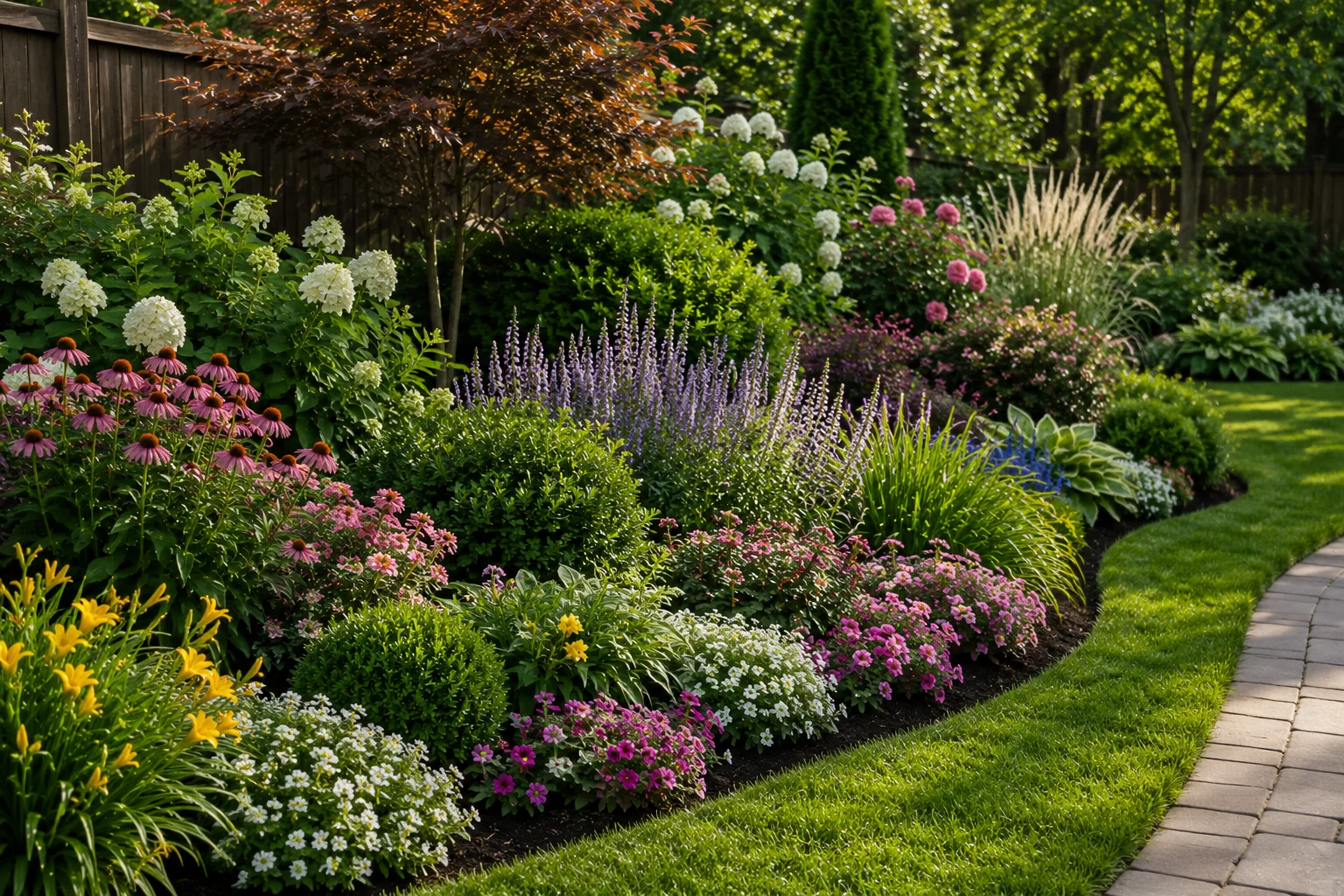
Plants are the heart of any garden or yard. But instead of placing plants randomly, the real beauty comes from layering them properly. Layered planting means arranging plants in different heights, colors, and textures so your garden feels full, balanced, and naturally beautiful.
A well-layered garden looks more professional because it creates depth. Tall plants or small trees can go at the back, medium shrubs can fill the middle, and smaller flowers or ground-cover plants can sit in the front. This makes the space feel rich and complete instead of flat or empty.
Layered plants also help soften hard areas like fences, walls, pathways, and patios. If your yard feels too plain, adding different plant heights can instantly make it feel more alive and welcoming.
Why this idea works
Layered planting creates a natural flow in your garden. It adds color, texture, and movement while making the outdoor space feel more lush and peaceful. It also helps the garden look beautiful from every angle.
How to create it
Start by choosing one area of your yard, such as a fence line, pathway edge, or corner. Add taller plants or small trees at the back. Then place medium-sized shrubs in front of them. Finally, add low flowers, grasses, or ground-cover plants at the front.
This creates a soft, layered look that feels natural and elegant.
Best plants to use
You can mix:
- tall ornamental grasses
- small trees
- flowering shrubs
- lavender
- hydrangeas
- roses
- boxwood
- ferns
- petunias
- daisies
- ground-cover plants
Best places to use this idea
This idea works well in:
- backyard borders
- front yard flower beds
- around patios
- along garden pathways
- beside fences
- around seating areas
- near garden walls
Styling tip
Choose plants that bloom at different times of the year. This keeps your garden looking fresh across different seasons instead of only looking beautiful for a short time.
Common mistake to avoid
Do not use too many different plant colors in one small area. Too many colors can make the garden look messy. Pick two or three main colors and repeat them throughout the garden for a clean, balanced look.
4. Add Outdoor Lighting for a Magical Evening Look
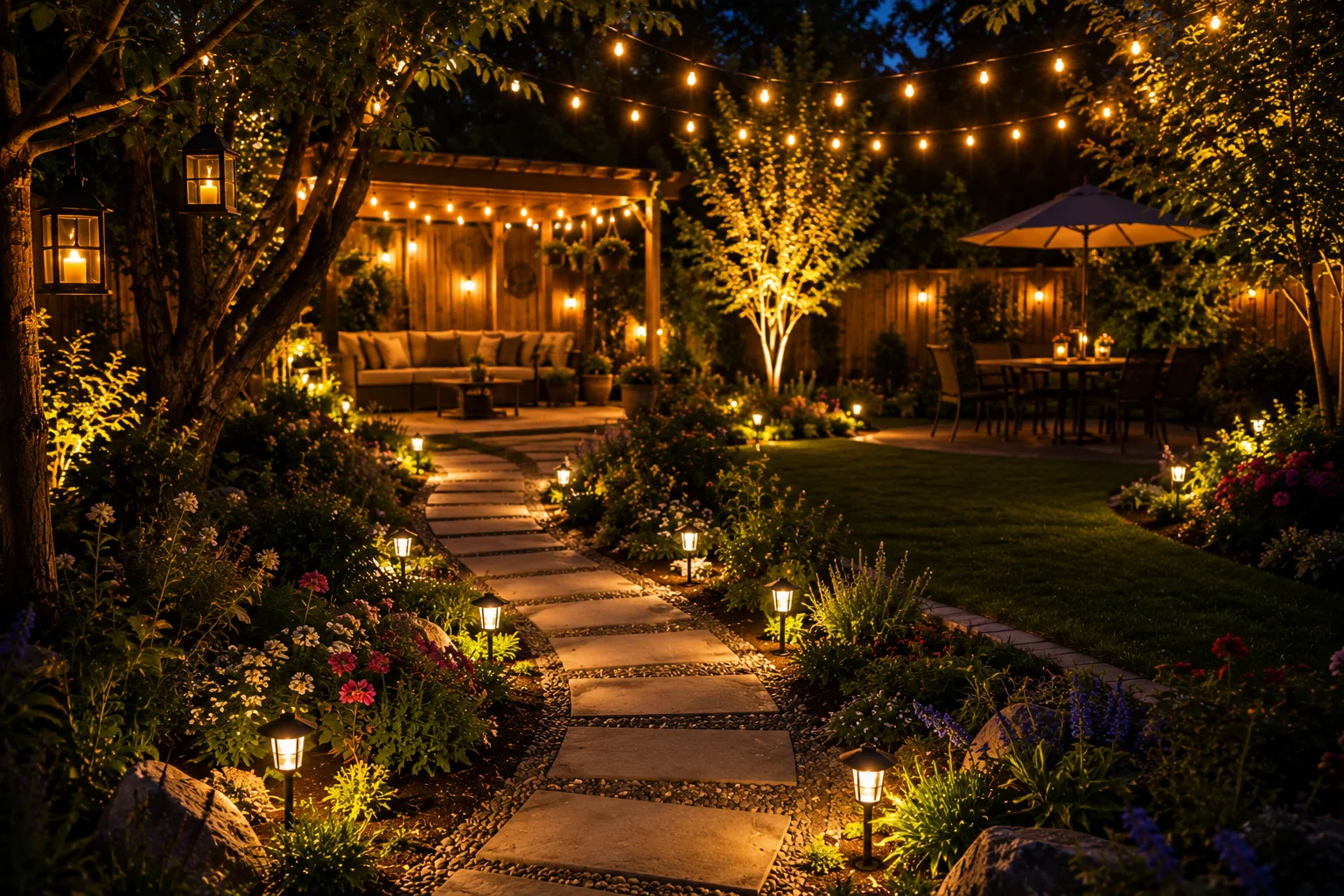
Outdoor lighting can completely change the mood of your garden or yard. During the day, plants, pathways, and seating areas create beauty, but in the evening, lighting brings everything to life. A few warm lights can make your outdoor space feel cozy, romantic, safe, and beautifully styled.
Good lighting does not need to be expensive. String lights, solar pathway lights, lanterns, wall lights, or small garden spotlights can create a soft and inviting atmosphere. The goal is not to make the yard too bright, but to create a gentle glow that highlights the best parts of your outdoor space.
Outdoor lighting is especially useful if you enjoy sitting outside in the evening. It makes the garden feel welcoming after sunset and allows you to use the space for dinner, tea, family time, or quiet relaxation.
Why this idea works
Lighting adds warmth and depth to your garden. It highlights pathways, plants, seating areas, trees, and decorative features. It also makes the space safer by making walkways and steps easier to see at night.
A garden with soft lighting feels more finished and luxurious. Even a simple yard can look beautiful when warm lights are placed in the right spots.
How to create it
Start by lighting the most important areas first. Add pathway lights along walkways, string lights above the seating area, and lanterns near chairs or tables. If you have trees, flower beds, or a garden wall, use small spotlights to highlight them softly.
Choose warm white lights instead of harsh bright white lights. Warm lighting feels more natural, cozy, and relaxing.
Best lighting ideas for gardens and yards
- string lights above a patio or seating area
- solar lights along pathways
- lanterns beside chairs or tables
- small spotlights under trees
- wall lights near entrances
- candles or LED candles for table décor
- low garden lights around flower beds
Best places to use this idea
This idea works well in:
- patios
- backyard seating corners
- garden pathways
- around trees
- near flower beds
- outdoor dining areas
- front yard entrances
- pergolas and gazebos
Styling tip
Use lighting in layers. Do not rely on one strong light. Mix string lights, lanterns, and pathway lights to create a soft and balanced outdoor glow.
Common mistake to avoid
Avoid using lights that are too bright or too cool-toned. Harsh lighting can make the garden feel uncomfortable instead of relaxing. Soft warm lighting gives the best evening atmosphere.
5. Add a Small Water Feature for a Peaceful Garden Feel
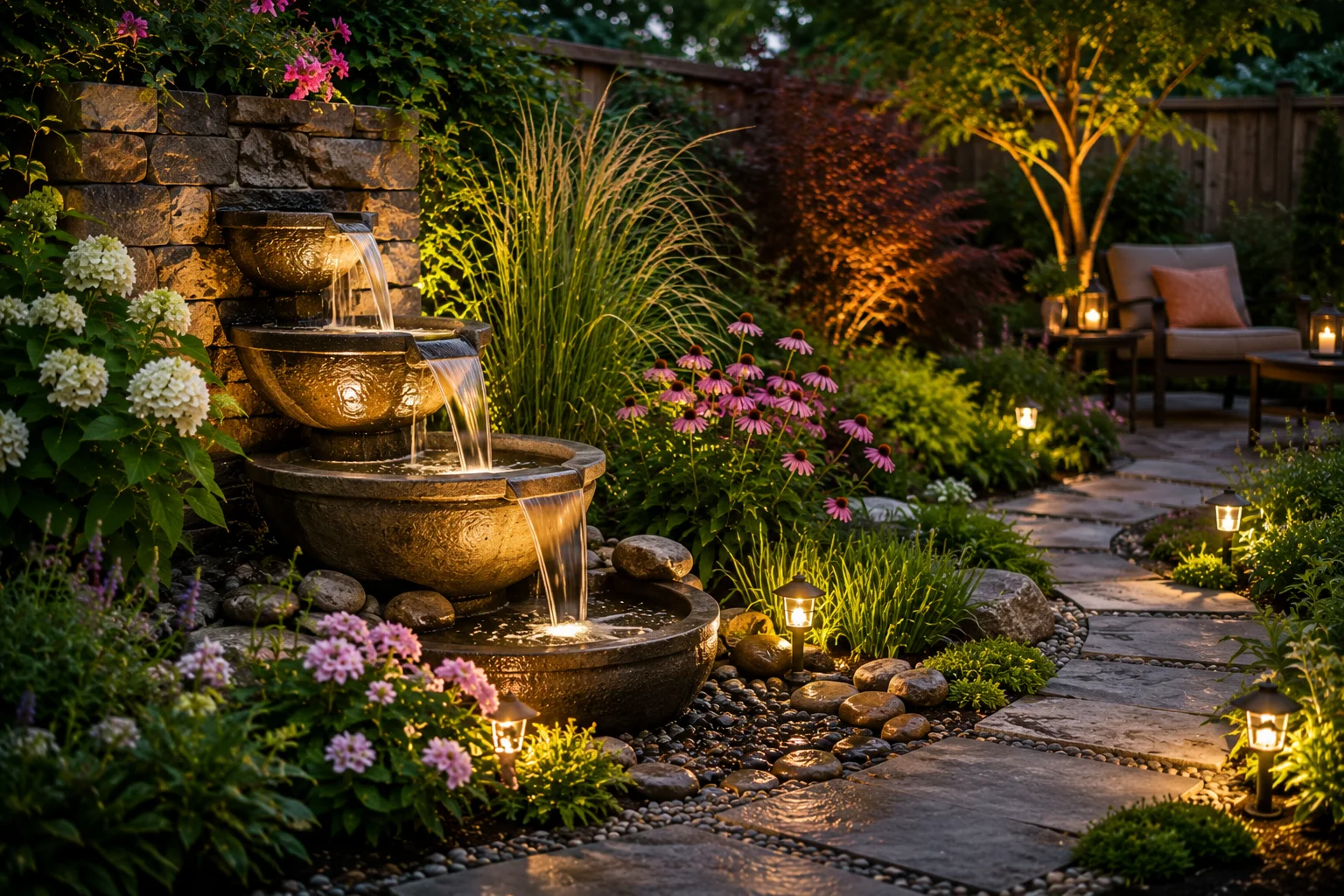
A water feature can instantly make a garden or yard feel calm, refreshing, and relaxing. The soft sound of moving water creates a peaceful atmosphere and helps your outdoor space feel more like a private retreat. You do not need a large pond or expensive fountain to achieve this look. Even a small tabletop fountain, ceramic water bowl, mini pond, or wall-mounted water feature can add beauty and calmness to your garden.
Water brings a natural sense of movement to outdoor spaces. While plants add color and texture, water adds sound, reflection, and freshness. It can become a beautiful focal point in the garden, especially when placed near a seating corner, pathway, or flower bed.
A water feature works well in both large and small yards. In a big backyard, you can use a pond, garden fountain, or waterfall-style feature. In a small patio or compact garden, a simple bowl fountain or modern stone water feature can create the same relaxing effect without taking too much space.
Why this idea works
Water features create a soothing environment. The gentle sound of flowing water helps make the garden feel more peaceful and inviting. It also adds visual interest and makes the outdoor space feel more complete and luxurious.
A water feature can also attract birds and butterflies, making your garden feel more alive and connected to nature.
How to create it
Choose a water feature that matches your garden size. For small spaces, use a compact fountain, ceramic bowl, or wall fountain. For larger yards, consider a pond, stone fountain, or small waterfall feature.
Place it where you can enjoy the sound and view, such as near your outdoor seating area, beside a pathway, or in the center of a garden bed. Surround it with plants, stones, flowers, or soft lighting to make it feel natural.
Best water feature ideas
- small garden fountain
- ceramic water bowl
- mini pond
- stone waterfall
- wall-mounted water feature
- birdbath
- modern outdoor fountain
- pond with floating plants
Best places to use this idea
This idea works beautifully in:
- backyard corners
- garden seating areas
- patio gardens
- near pathways
- beside flower beds
- front yard entrances
- small courtyard gardens
Styling tip
Surround your water feature with natural materials like stones, pebbles, plants, and soft lighting. This makes it feel like it belongs in the garden instead of looking like a separate decoration.
Common mistake to avoid
Do not choose a water feature that is too large for your space. A huge fountain in a small garden can feel crowded, while a very small feature in a large yard may go unnoticed. Keep the size balanced with your outdoor area.
6. Use Raised Garden Beds for a Clean and Organized Look
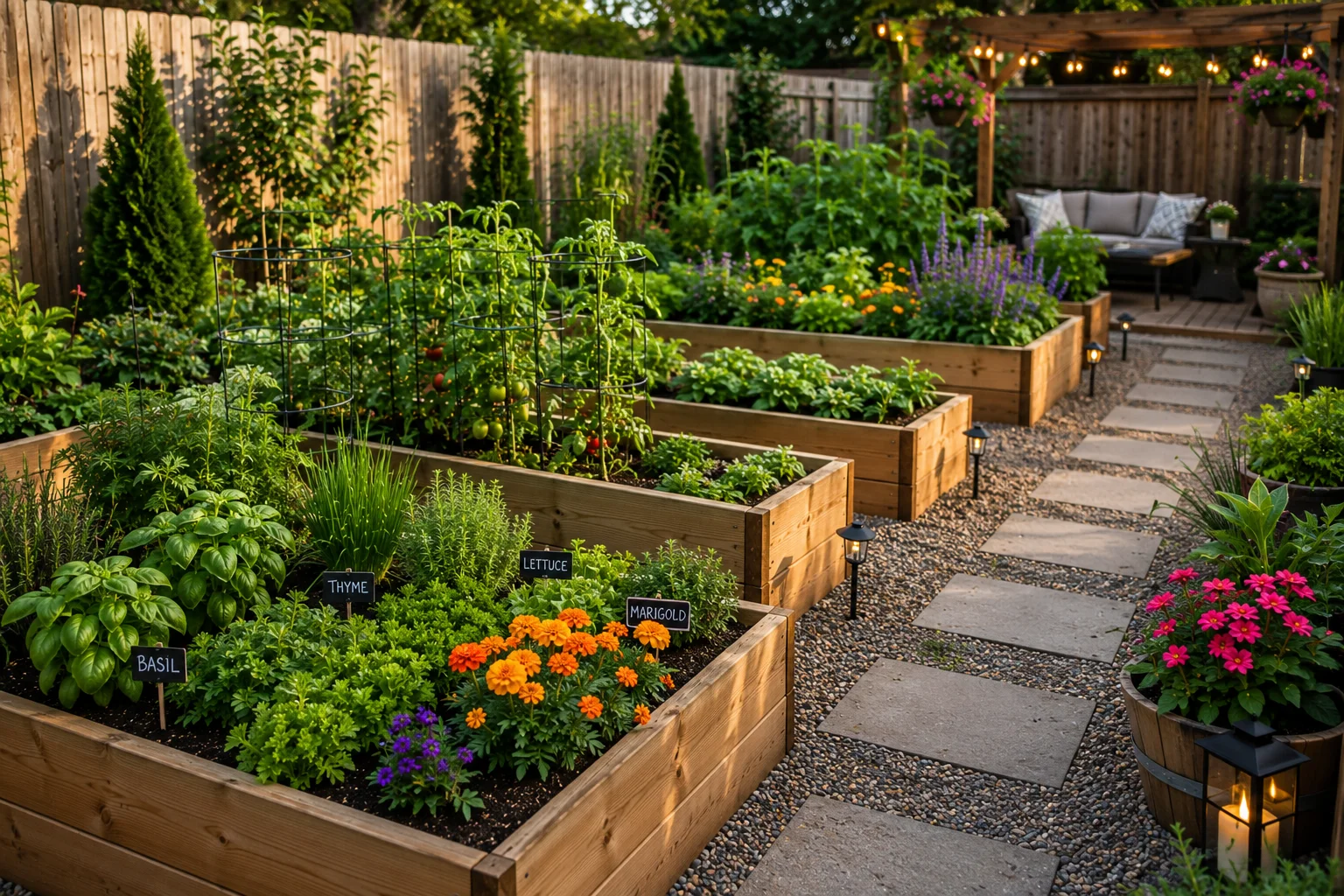
Raised garden beds are a smart and beautiful way to make your garden or yard look more structured, neat, and easy to manage. They are especially useful if you want to grow flowers, herbs, vegetables, or small plants without making the space feel messy. Instead of planting everything directly into the ground, raised beds create clear sections that make your outdoor area feel more planned and polished.
This idea works well for both large backyards and small gardens. Even a compact yard can look stylish with one or two raised beds placed along a wall, fence, pathway, or patio edge. They help separate planting areas from walking or seating areas, giving your garden a cleaner and more organized appearance.
Raised garden beds can be made from wood, stone, brick, metal, or concrete. Wooden beds give a natural and warm look, while stone or brick beds feel more classic and permanent. If you prefer a modern garden style, sleek metal or concrete raised beds can look very elegant.
Why this idea works
Raised beds add structure to your garden. They make planting areas look intentional instead of scattered. They also make gardening easier because you can control the soil, improve drainage, and reduce weeds.
They are also practical for people who want to grow herbs or vegetables at home. You can plant mint, basil, rosemary, tomatoes, lettuce, flowers, or seasonal plants in a clean and organized way.
How to create it
Start by choosing a sunny area in your yard. Most herbs, vegetables, and flowering plants need good sunlight. Then decide the size of your raised bed based on your available space. Keep it wide enough for planting, but not so wide that you cannot reach the middle easily.
Fill the bed with good-quality soil and compost. Then arrange your plants by height. Taller plants should go at the back, medium plants in the middle, and smaller plants or flowers at the front.
Best plants for raised garden beds
- basil
- mint
- rosemary
- thyme
- lettuce
- tomatoes
- peppers
- lavender
- marigolds
- petunias
- small shrubs
- seasonal flowers
Best places to use this idea
This idea works beautifully in:
- backyards
- side yards
- patio edges
- small gardens
- kitchen gardens
- front yard flower beds
- along fences
- near pathways
Styling tip
Use matching raised beds if you want a clean and modern look. For a softer natural garden style, use wooden beds with flowers and herbs spilling slightly over the edges.
Common mistake to avoid
Do not overcrowd the raised bed with too many plants. Plants need space to grow properly. If you plant too closely, the bed can quickly look messy and become harder to maintain.
7. Create a Multi-Use Outdoor Space
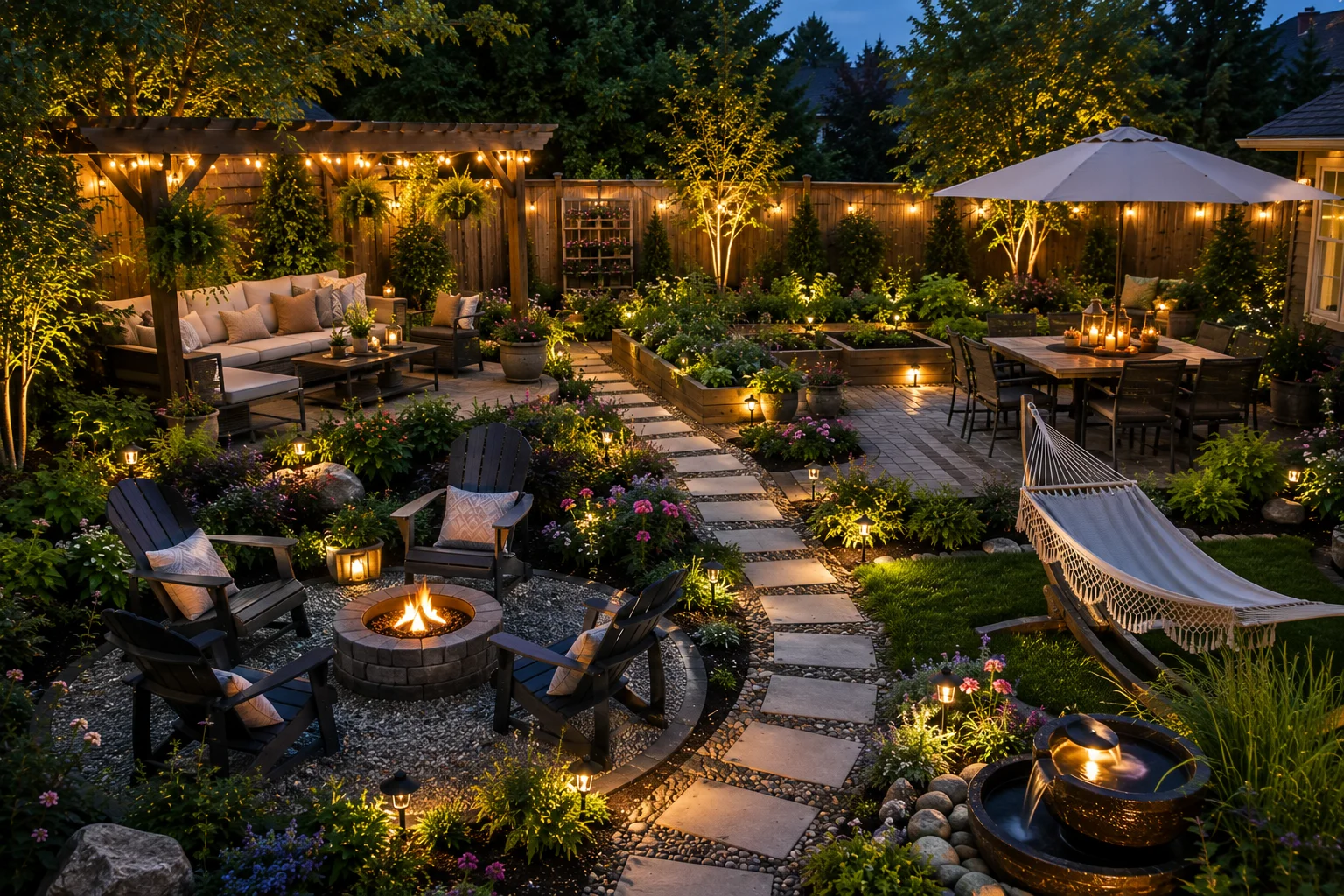
A beautiful garden or yard should not only look good — it should also be useful. A multi-use outdoor space allows you to enjoy your yard in different ways, whether you want to relax, eat, entertain guests, garden, or spend quiet time with family.
Instead of designing the whole yard for only one purpose, divide it into small functional zones. For example, one corner can be used for seating, another area can have a dining table, one side can include raised garden beds, and a small pathway can connect everything together. This makes the outdoor space feel organized, practical, and complete.
Even if your yard is small, you can still create zones. A compact patio can have a small seating area, a few potted plants, vertical planters, and warm lights. The goal is to make every part of the outdoor area feel intentional.
Why this idea works
A multi-use yard gives more value to your outdoor space. It becomes more than just a garden — it becomes a place for relaxing, hosting, eating, and enjoying nature.
It also helps your yard feel more balanced. When each area has a purpose, the space looks cleaner and easier to use.
How to create it
Start by deciding what you want from your outdoor space. Do you want a place to sit? A place to eat? A small garden? A play area? A peaceful corner?
Once you know your needs, divide the yard into simple zones. You can separate them using plants, outdoor rugs, stepping stones, planters, low borders, or lighting.
Outdoor zones you can create
- cozy seating corner
- outdoor dining area
- small herb or vegetable garden
- flower bed area
- fire pit corner
- reading or tea corner
- kids’ play space
- pathway or walking area
Best places to use this idea
This idea works well in:
- large backyards
- small yards
- patios
- terraces
- side gardens
- family outdoor spaces
- garden entertainment areas
Styling tip
Use similar colors and materials across all zones so the yard feels connected. For example, if you use wood furniture in the seating area, add wooden planters or a wooden dining table in another zone. This creates a consistent and polished look.
Your garden or yard does not need to be perfect to feel beautiful. With a few thoughtful updates, you can turn any outdoor space into a peaceful, stylish, and practical retreat. A cozy seating corner, a simple pathway, layered plants, warm lighting, a small water feature, raised garden beds, and multi-use zones can completely change how your yard looks and how you use it every day.
The best outdoor spaces are the ones that feel natural, comfortable, and personal. Start with one idea that fits your space and budget, then slowly build around it. Over time, your garden can become a place where you relax, entertain, connect with nature, and enjoy quiet moments away from the rush of daily life.
Whether you have a large backyard, a small patio, or a simple front yard, these garden and yard ideas can help you create an outdoor space that feels fresh, welcoming, and truly yours.